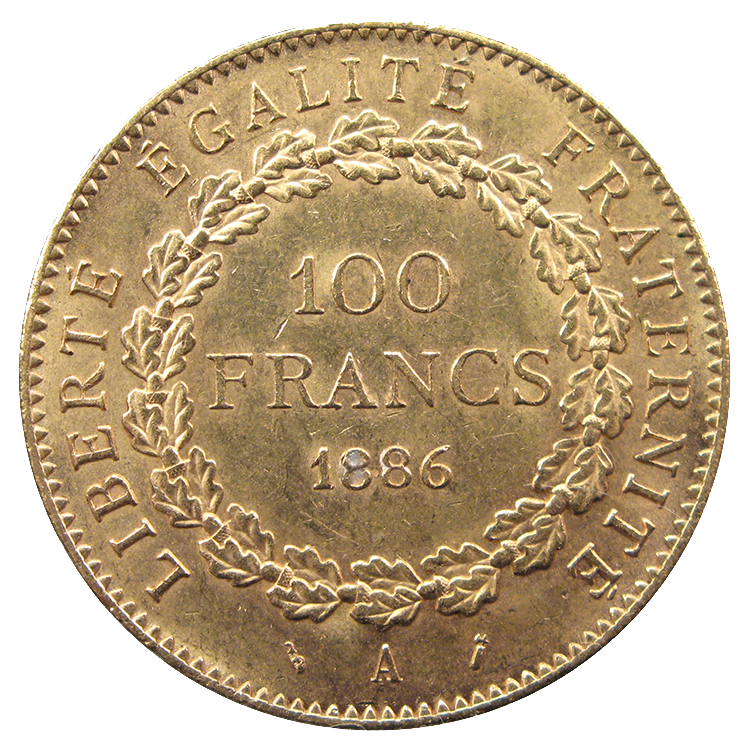
Historic French gold franc coins (20–100 francs), classic Latin Monetary Union world gold
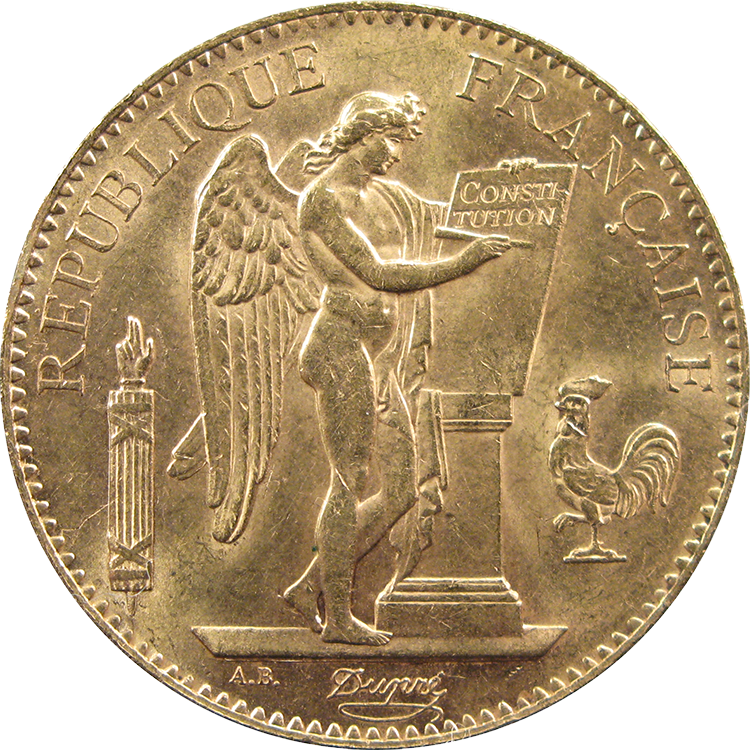
Introduced in modern form under Napoleon and later expanded under subsequent monarchs and republics, gold francs became a core part of France’s 19th‑ and early 20th‑century gold‑standard currency, circulating widely at home and across much of Europe. All of the main LMU‑era gold franc coins were struck in a 90% gold / 10% copper alloy, with carefully standardized sizes and gold weights so a 20 franc, 40 franc, 50 franc, or 100 franc piece could be trusted for its metal value regardless of the specific design or issuing year. Over time, these coins carried a parade of important French motifs: early Napoléon and Louis‑era monarch portraits, later “Angel” and Cérès Head republic types, and eventually the famous Rooster design symbolizing the bold spirit of the Third Republic.
For investors and collectors, the 20 franc “Napoleon” and Rooster pieces are the best‑known and most widely traded, offering fractional gold exposure with deep liquidity and strong global recognition, while the larger 40, 50, and 100 franc coins provide more substantial gold weight and scarcer, high‑impact types for those who want standout historical pieces. Taken together, French gold francs offer a flexible way to hold old‑world gold: you get consistent, reliable gold content across multiple denominations, a long timeline of changing rulers and designs, and the cachet of a major European minting tradition, making these coins a natural complement to Swiss 20 Francs, British sovereigns, and other classic world‑gold issues in a diversified portfolio.